Advances in search engines make it seem like they can read your mind. But as a marketer, how can you read the minds of search engines — to know what they like, what they don’t, and how they’re working?
Well, you can’t read the mind of Google, but you can read seven insights from the Wizard of Moz, Rand Fishkin, which he shared in his presentation, The Absolute Most Up-to-Date Presentation on What the Heck is Going on With Search Engines, at Content Marketing World 2016.
Rand likes to count down so I’ll honor his approach in this post.
7. Google is still growing but others are too
Sure, Google has become ubiquitous — and even a verb. It consistently receives over 85% of all search engine traffic in North America, according to Gs.StatCounter.
While it remains king, it isn’t the only site where people search. Though still used by less than 1% of searchers, DuckDuckGo is the fastest-growing search engine, mostly due to the fact that it doesn’t track searches or users.
But don’t think of search simply in the framework of search-engine platforms. YouTube, actually, is the №2 search engine. Facebook, for example, is eager to keep visitors on its site and has become a growing resource used by searchers.
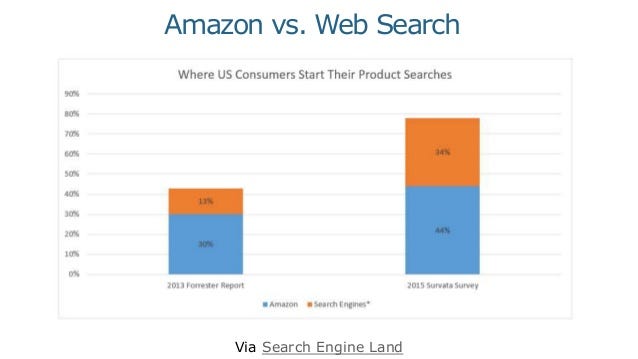
And don’t forget one of, if not the, largest commercial search “engine” of all — Amazon.com.
HOW YOU CAN REACT:
- Don’t ignore a search channel because it’s not Google.
- See where your competitors get their search traffic (SimilarWeb PRO is a resource for this).
- Apply different tactics in your content to reach audiences on different sites. (For example, this article shares Amazon’s ranking factors.)
- Deliver content for multiple search engines. (For example, Moz uploads a video to its own website because it wants to rank for it on Google. Three months later, it publishes the same video to YouTube to gain traction there.)
6. Google now answers simple queries — users don’t need to click
If your site is the top resource to answer a simple question, Google is taking your information and sharing it directly on the search page (featured snippet). You don’t even get a click.
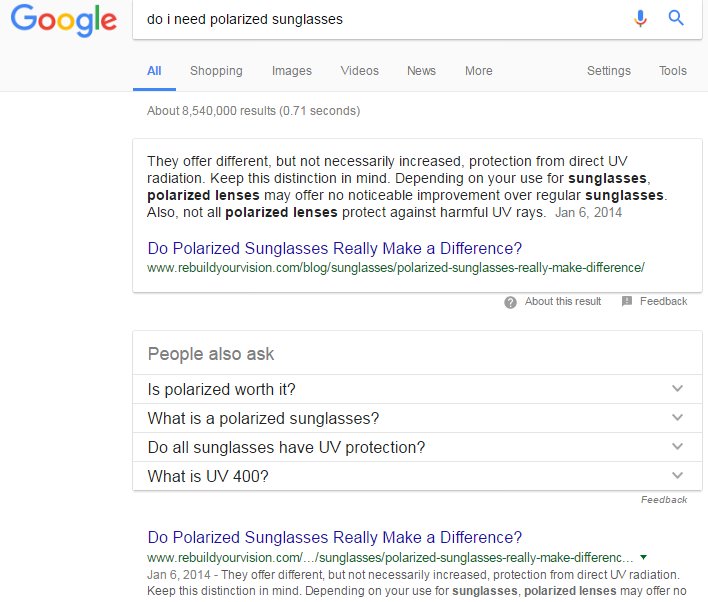
Now a site with the premium №1 position on the results page appears twice (in the published answer from Google [Rand refers to this as the “0” position] and in the №1 position).
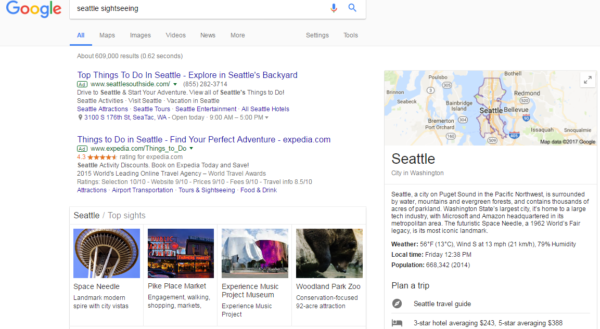
Moz thought it would lose traffic as Google revealed the answers, but traffic grew. In contrast, some sites have lost by some estimates up to 50% of their traffic — half of their search volume is now satisfied by the featured snippets, visual carousel results, and Google Maps pages that show up in results before organic links.
HOW YOU CAN REACT:
- Research your keywords to pick ones with higher click-through rates. (You can estimate CTRs in Google AdWords’ Keyword Planner or use Moz’s Keyword Explorer for specific numbers.)
- Focus on structuring your content to be a featured snippet in search engines. (Learn more about structuring for snippets in this article.)
3. There are more nontraditional ways to get into Google than ever before
Only 3% of search results reflect the “classic 10 blue links,” according to Moz’s research. Focusing only on securing those classic results dramatically reduces organic click-through rates.
As such, various content search types — knowledge panels, images, related questions, videos, featured snippets, knowledge cards, etc. — are attractive to Google.
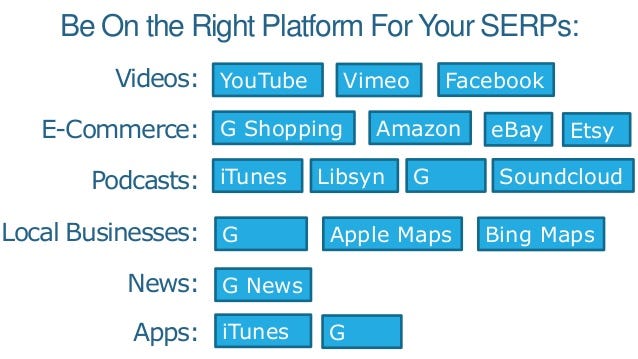
However, it isn’t as easy as adding more video to your site. Google restricts what sites can get into certain types of content listings. For example, video snippets only appear from YouTube and Vimeo. On mobile, more kinds of searches are limited to particular networks, such as apps from Google Play and the iPhone App Store.
HOW YOU CAN REACT:
- Analyze which types of SERPs appear for the keywords you care most about.
- Determine what verticals and SERP types you should optimize for. (For example, if you see images in the SERP, you might want to add some visual charts to text-only content.)
- If you can’t break into a particular SERP format, consider alternative ways. (For example, instead of “Seattle sights,” you could optimize for “Seattle sightseeing map.”)
- Be on the right platforms for keyword search.
2. Matching searcher intent is more important than matching searcher keywords
Google strongly seeks to deliver content that the searcher wants to find. Keyword targeting is still needed, but it’s no longer a competitive advantage. Marketers must consider search intent more than they ever have.
Special Offer:
A chance to win CleanMyMac 3 free Licenses! Bravo!
offering 10 copies of CleanMyMac3!
Win CleanMyMac 3 free License Professional Giveaway (10 x Full Licenses) support by GroupBuy SEO Tools
Mention this giveaway part on your blog, and send us link at doogeetop@gmail.com, you have a chance to get CleanMyMac 3 free Licenses!
To participate: repost this giveaway on your blog,tumblr,wordpress or blogspot.


No comments:
Post a Comment